In the ever-evolving lexicon of street style, a quiet revolution is unfolding at the intersection of delicate fabric and urban attitude. The lace bandana—once relegated to vintage drawers and bridal accessories—has been decisively reclaimed, emerging as one of 2026's most compelling and versatile style tokens. This isn't about twee, romantic nostalgia; it's about textural contrast, subversion, and artful juxtaposition. The search for "how to wear a lace bandana" is spiking because people recognize its power to instantly elevate the mundane. This definitive guide will show you how to master lace bandana street style, transforming your most casual outfits with a touch of intricate, rebellious grace.
The 2026 Shift: Why Lace Belongs on the Street Now
To wear it convincingly, you must understand the cultural shift that makes this trend resonate. Lace's journey from the altar to the asphalt is a story of contextual rebellion.
-
The Subversion of "Feminine" Codes: Lace carries centuries of association with femininity, luxury, and occasion. Placing it within the context of streetwear—a realm born from utility and counter-culture—creates a powerful, modern tension. It challenges outdated notions of what fabrics are "appropriate" for day-to-day wear.
-
The Rise of "Tactile Dressing": 2026 style is deeply sensory. It's about mixing textures that invite a second look. The contrast of delicate, floral-patterned lace against the rugged grain of denim, the soft fleece of a sweatshirt, or the sleek surface of leather is the core of this trend's appeal. It adds a layer of complexity and craftsmanship to simple silhouettes.
-
The Personalization of Utility: The bandana itself is a utilitarian accessory (think farmers, bikers, laborers). The lace iteration personalizes and elevates this function, turning a practical item into a deliberate fashion statement that hints at a unique personal aesthetic.
Selecting Your Lace Bandana – The Right Foundation
Not all lace bandanas are created equal. The wrong choice can skew costumey or overly precious.
-
Material & Color:
-
Opt for Cotton or Polyester Lace: These are sturdier, hold their shape better, and are easier to care for than delicate silk Chantilly. A slightly stiff lace will create more dramatic folds and knots.
-
Champion Neutrals: Black, white, and ecru/off-white are your foundational power players. They are the most versatile and create the clearest, chicest contrast.
-
Statement Hues: Once you've mastered the neutrals, explore deep burgundy, forest green, or navy lace for a richer, more specific mood.
-
-
Pattern & Scale:
-
Medium-Scale Florals or Geometrics are ideal. Avoid extremely dainty, tiny patterns (they get lost) and overly large, dramatic motifs (they can overwhelm).
-
A simple, all-over floral or a classic paisley-inspired lace offers the perfect balance of detail and cohesion.
-
-
Size & Shape: A traditional bandana square (approx. 22"x22") is perfect. It provides enough fabric for versatile styling without becoming a scarf.
Master Styling Techniques: Four Core Street Style Looks
The magic is in the execution. Here are the four definitive, 2026-approved ways to tie and style your lace bandana.
Technique 1: The Low Ponytail Wrap (The Effortless Chic Standard)
This is the ultimate entry-level, "I-just-thought-of-this" look that appears endlessly cool.
-
Fold your bandana into a long, thin strip (about 2-3 inches wide).
-
Gather your hair into a low, loose ponytail.
-
Wrap the lace strip around the base of the ponytail as you would a hair tie.
-
Tie it in a simple knot or a small bow at the top or side. Let the ends trail naturally.
-
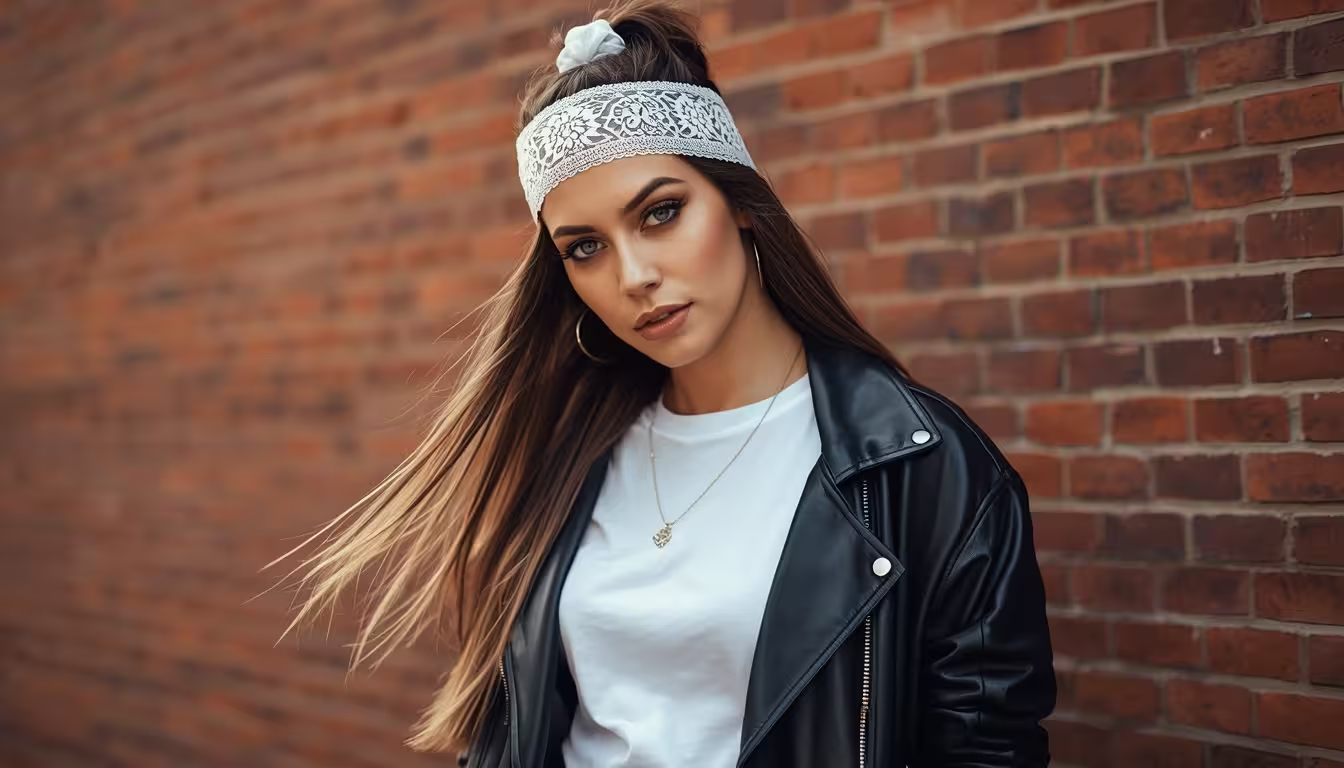
Perfect With: A crisp white button-down with jeans, a slouchy leather jacket, and sneakers. It adds a point of intrigue to a clean, classic outfit.
Technique 2: The Headband Moment (The Retro-Futurist Vibe)
This style frames the face and makes a direct, confident statement.
-
Fold the bandana into a wide band (4-5 inches).
-
Place the center of the band at your hairline and wrap the ends around your head, tying them at the nape of your neck underneath your hair.
-
Gently pull a few face-framing pieces of hair loose in the front. The key is to keep your hair down in the back, letting it flow over the knot.
-
Perfect With: An oversized graphic tee, baggy cargo pants, and chunky boots. The mix of tough-girl utility and delicate lace is peak 2026 energy.
Technique 3: The Neck Cravat (The Elevated Layer)
This transforms the bandana from a hair accessory into a neckline-enhancing jewel.
-
Fold the bandana into a triangle, then roll it from the long edge into a thin, rope-like strip.
-
Drape it around your neck.
-
Tie it in a simple, loose square knot or a single-loop knot at the center of your throat or slightly to the side. Leave the ends to drape down.
-
Perfect With: A simple black tank top or a crewneck sweater. It instantly adds a layer of intention to a minimalist base, drawing the eye upward.
Technique 4: The Bag Charm (The Subtle Detail)
For those who want to test the waters with maximum subtlety.
-
Fold or roll the bandana into a thin strip.
-
Simply tie it around the handle or strap of your favorite tote bag, crossbody, or the belt loop of your jeans.
-
Let the ends flow freely for a touch of movement.
-
Perfect With: Any outfit. It’s the perfect way to introduce the trend without committing to wearing it on your body. It personalizes a simple bag instantly.
Building Complete 2026 Street Style Outfits
The lace bandana is the catalyst, but the outfit is the canvas. Here’s how to build looks around it.
Outfit 1: The Denim-on-Denim Revival
-
Base: A classic blue denim jacket over a white ribbed tank. Light-wash, straight-leg jeans.
-
Footwear: White leather sneakers or beat-up cowboy boots.
-
The Bandana: A black lace bandana styled in The Low Ponytail Wrap.
-
Why it Works: The black lace cuts through the monochromatic blue, adding a necessary third texture and a hit of sophisticated darkness that grounds the look.
Outfit 2: The Tailored Sportswear Mix
-
Base: A sleek, grey marl sweat set (zip-up hoodie and matching joggers) in a premium French terry.
-
Layer: A long, tailored wool coat thrown over the top.
-
Footwear: Sleek leather loafers or minimal trainers.
-
The Bandana: An ecru lace bandana styled as The Neck Cravat.
-
Why it Works: The ecru lace bridges the gap between the casual sweats and the formal coat, tying the high-low mix together with an element of artisanal detail.
Outfit 3: The Minimalist Leather Statement
-
Base: A perfect black turtleneck. Black, high-waisted tailored trousers or leather pants.
-
Layer: A structured black blazer.
-
Footwear: Pointed-toe ankle boots.
-
The Bandana: A white lace bandana styled as The Headband Moment.
-
Why it Works: The all-black ensemble is a powerful but severe canvas. The white lace headband is the single, shocking point of contrast—it’s unexpected, feminine, and utterly captivating against the dark, sharp lines.
The Finishing Touches: Mindset and Maintenance
-
The Attitude: Wear your lace bandana with the same nonchalant confidence you’d wear a beaten-up leather jacket. It’s just another part of your uniform. Overthinking it kills the vibe.
-
Care: Most cotton lace can be gently hand-washed or placed in a mesh bag for a delicate machine cycle. Lay flat to dry to preserve its shape. A quick pass with a cool iron can smooth out any stubborn wrinkles.
-
Final Rule: Avoid matchy-matchy. Do not wear a lace bandana with other overtly lace items. Its power is in contrast. Let it be the singular, delicate note in a symphony of stronger textures.
Conclusion: Your Signature Detail
Lace bandana street style in 2026 is a masterclass in the power of a single, well-chosen accessory. It proves that style is not about the cost of your clothes, but about the intelligence of your combinations. By mastering these simple tying techniques and understanding the art of juxtaposition, you unlock a tool that can reinvent your wardrobe staples daily. In a world of fast-fashion clones, a piece of intricate lace tied just so is a whisper of personality, a commitment to detail, and the ultimate 2026 signature of someone who understands that true edge often comes from the most delicate of places.